

Rethinking Movie Marketing: Marty Supreme’s Culture-First Approach
Most movie releases rely on familiarity: recognizable franchises, predictable press tours, and saturation advertising. Marty Supreme took the opposite approach. Instead of leaning into explanation, the film’s rollout relied on strategic ambiguity, physical presence, and cultural placement, a model that increasingly resembles how modern brand partnerships operate.
Produced by A24 and directed by Josh Safdie, Marty Supreme didn’t market itself like a traditional film. It behaved more like a cultural object deliberately placed into the public consciousness.
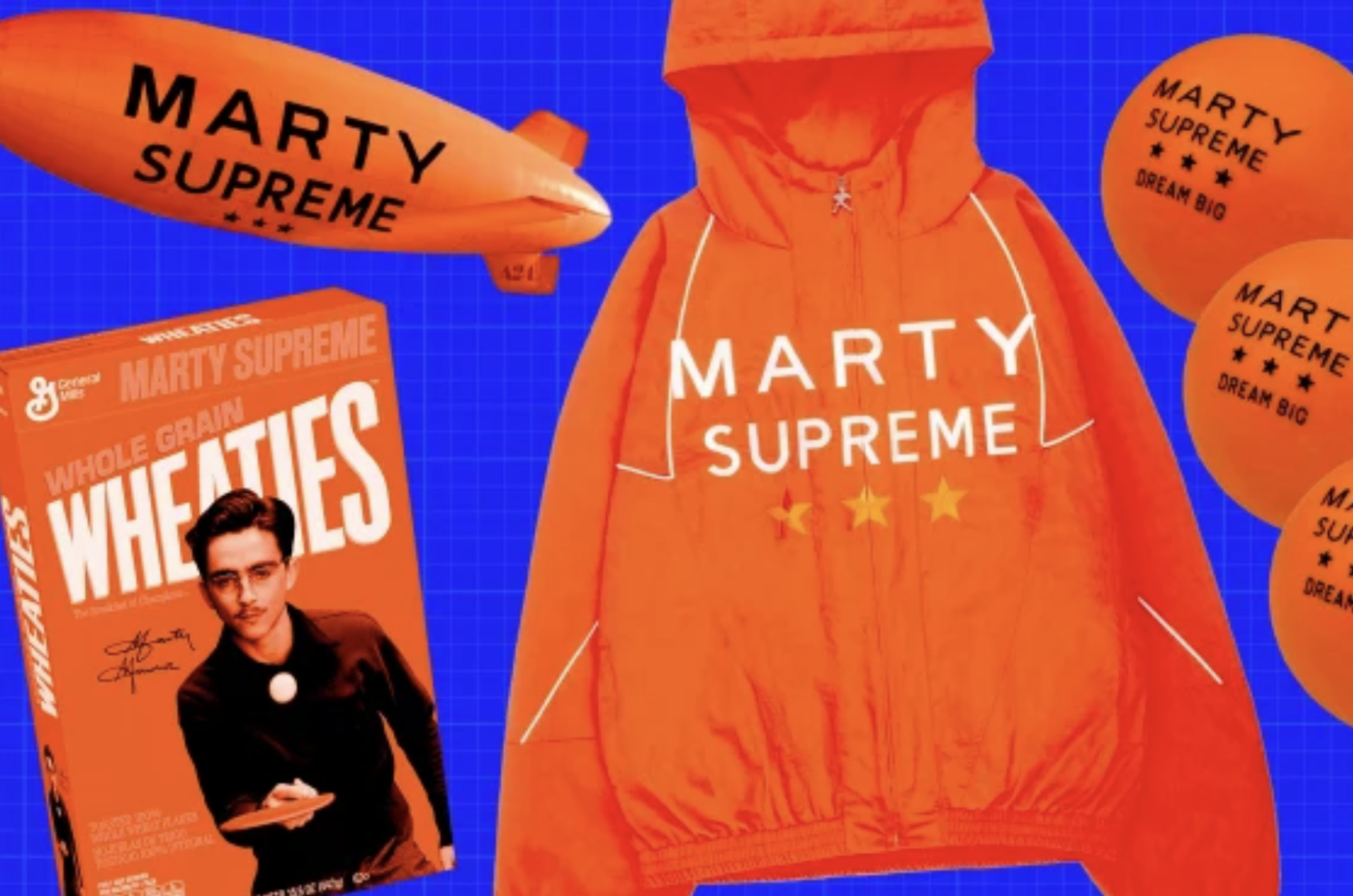
Marketing Without Over-Identification
One of the most notable aspects of Marty Supreme’s release was how little it tried to define itself upfront. Early visuals and public moments emphasized tone over plot, trusting audiences to sit with uncertainty and draw their own conclusions.
According to Business Insider, the Marty Supreme marketing campaign succeeded because it rejected traditional film promotion in favor of bold, real-world stunts and star-driven moments that felt more like cultural participation than paid advertising.
This approach mirrors a growing partnership strategy across industries: presence without over-branding. Much like brands activating cities, transit systems, or public environments without overt messaging, the film relied on recognition rather than instruction.
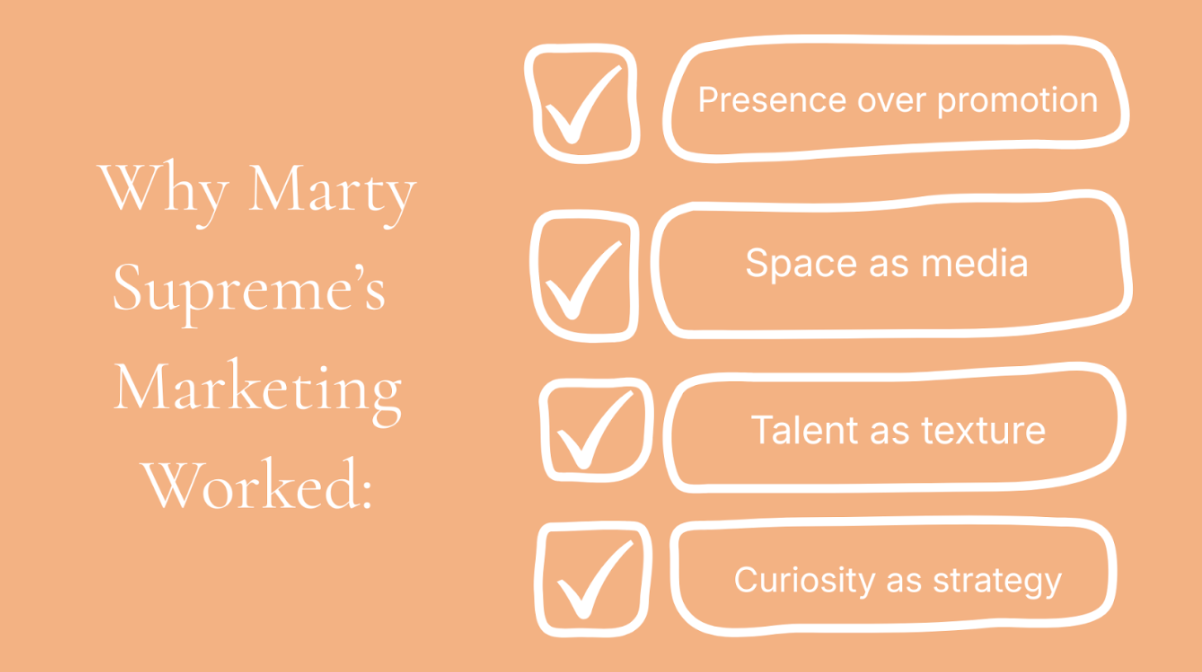
The campaign didn’t ask for attention. It assumed curiosity would follow.

Public Space as a Strategic Partner
Rather than treating media as something to buy, Marty Supreme treated space itself as a collaborator. City environments became discovery points, allowing the film to exist alongside daily life instead of interrupting it.
This reflects a broader shift in partnership thinking:
- Brands are moving away from interruption-based visibility
- Public environments are becoming experiential media
- Cultural relevance is built through proximity, not repetition
By embedding the film into physical contexts, the release strategy blurred the line between promotion and presence.

Talent as Texture, Not Leverage
Timothée Chalamet’s involvement in Marty Supreme also resisted traditional celebrity-marketing frameworks. Rather than positioning him as the primary promotional engine, the campaign allowed his participation to feel embedded and restrained.
There was no overexposure or forced virality. Instead, Chalamet functioned as part of the film’s atmosphere, reinforcing credibility rather than amplifying reach.
This reflects an evolution in partnership dynamics: talent is no longer most valuable solely for its visibility, but for its cultural alignment.

Why This Strategy Resonates Now
Audiences are increasingly adept at recognizing when they’re being sold to. The success of Marty Supreme’s rollout suggests a growing appetite for marketing that feels observational rather than persuasive.
The film’s strategy aligns with how effective partnerships function today:
- Minimal explanation
- Strong contextual fit
- Trust in audience intelligence
- Cultural confidence over scale
Rather than chasing mass appeal, the campaign signaled belonging by rewarding those who noticed.
The Takeaway for Brands
Marty Supreme offers a clear lesson for brands exploring partnerships in 2026: You don’t need to explain everything to be understood.
When brands collaborate with culture, space, and audience behavior instead of relying on overt messaging, they create room for meaning to emerge organically. The most effective partnerships today don’t announce themselves as campaigns. They show up quietly, in the right place, and allow culture to complete the story.
To dive deeper into the mechanics of cultural partnerships, download our latest white paper or reach out if you’re exploring opportunities of your own.
Related Posts
How Scentbird x RuPaul’s Drag Race Turns Product Placement Into Participation
The Scentbird x RuPaul’s Drag Race partnership reimagines product integration by turning fragrance into a participatory fan experience. Through in-show activations and season-long visibility, the collaboration demonstrates how modern brand partnerships can move beyond traditional placement and create deeper cultural engagement.

Partnership Trilogy: Outlander x Drift x Scentbird
The Outlander x Drift x Scentbird collaboration demonstrates how experiential partnership marketing can extend storytelling beyond the screen. By integrating scent into the viewing ritual, the partnership transforms a season premiere into a sensory experience, offering a blueprint for how entertainment brands can move from exposure to immersion.
It’s YOUR Happy Place: HERSHEY’S Olympic Activation Strategy
Hershey’s Olympic activation goes beyond logo placement. By transforming medal symbolism into a limited-edition retail product, the brand turns global visibility into measurable sell-through. Here’s how cultural alignment, retail strategy, and digital participation create a modern partnership blueprint.
