
A Cultural Collaboration
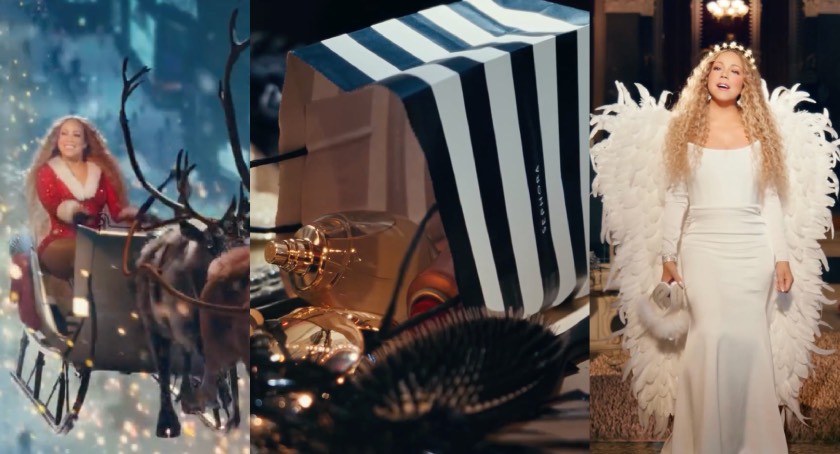
Every year after Halloween, the holiday season begins with one defining moment: Mariah Carey’s iconic declaration, “It’s time.” This year, that moment arrived with a twist, a new partnership between Sephora and Carey that transformed her beloved ritual into a full-scale brand experience. According to Billboard, the Joseph Kahn–directed ad opens with Carey proclaiming, “Halloween slayed … but now, it’s time!”, a line that instantly signaled the official start of the holidays.
For Sephora, this was more than a campaign; it was a cultural statement. The brand positioned itself at the center of seasonal excitement, pairing Carey’s larger-than-life persona with humor and glam to celebrate beauty as joy and self-expression. The collaboration fused pop culture, beauty, and nostalgia into one glittering campaign, complete with a short film co-starring Billy Eichner, a Times Square takeover, and curated holiday gift sets available in-store and online.

The Spark: A Holiday Story with Heart (and Humor)
In the campaign ad, a mischievous elf (played by Eichner) “steals” Carey’s makeup and threatens to pawn it and “go on strike,” only to be saved and transformed by Carey herself, who restores the festive spirit with her signature sparkle and a snow-dusted sleigh of Sephora gifts.
Visually, the campaign was pure fantasy: a glossy mix of glam and humor that echoed Mariah’s holiday persona. On social, the #ItsTime hashtag lit up Instagram, TikTok, and X, as creators posted unboxings, GRWM videos, and Mariah-inspired glam moments. According to an article in azcentral, the campaign generated over 200 million views across social, proving the strategy worked: merging cultural iconography with digital storytelling to create a participatory holiday moment. For the most part, it succeeded. Sephora became synonymous with the season’s kickoff.

The Partnership Playbook
What set this collaboration apart wasn’t simply celebrity casting, but the strategic exchange of equity between both partners.
Mariah Carey didn’t just appear in a Sephora campaign; she brought a cultural ritual that already lives in people’s minds and social feeds every November. Sephora supplied the infrastructure to turn that ritual into a physical and digital brand moment: storefronts, e-commerce, social commerce, sampling, and a hero narrative built for short-form video.
This is the difference between endorsement and partnership:
- Endorsement borrows attention.
- Partnership creates new value.
For Carey, the collaboration extended her holiday moment beyond streaming and into gifting, beauty routines, and shoppable storytelling.
For Sephora, it linked the brand to a cultural countdown that returns every year, giving them a recurring, emotional entry point into holiday shopping behaviors.
In other words, the campaign didn’t attach a celebrity to a product. It attached a brand to a seasonal behavior. And that’s where partnership marketing is headed, toward collaborations rooted in rituals, not just reach.

When Celebration Sparks Conversation
Even holiday magic can spark debate. Shortly after launch, the campaign drew mixed reactions online. Some viewers found humor in the elf’s “strike” storyline, while others viewed it as tone-deaf in today’s economic climate. The backlash, while limited, served as an important reminder: in an era where every campaign becomes part of the cultural conversation, context is everything.
According to an article on Today.com, some social media users criticized the ad’s premise, calling it insensitive to working-class struggles. One TikTok user described it as “mocking the people who’ve decided not to fuel the economy this year,” while another labeled it “one of the most tone-deaf advertisements of the year,” referencing rising financial hardships. Others pointed out the irony of using “All I Want for Christmas Is You”, a song about love over materialism, to promote luxury beauty products.
While Sephora and Mariah Carey didn’t respond publicly, the discussion around the ad revealed something deeper: audiences now expect brands to balance entertainment with empathy. Consumers don’t just buy into campaigns; they evaluate the stories behind them.
Lessons for Brands
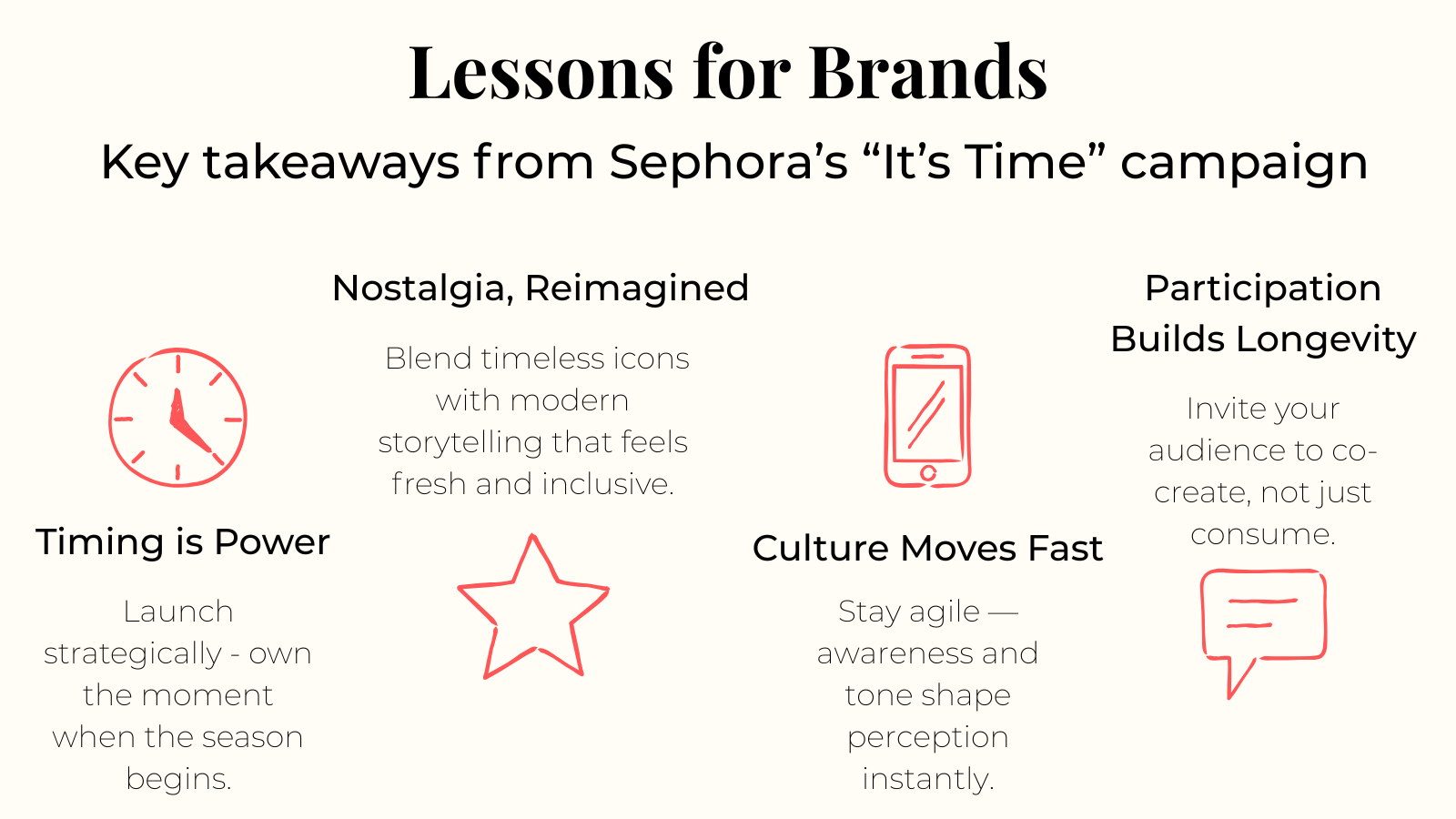
The It’s Time campaign stands as a fascinating case study in modern holiday marketing, both for what it achieved and what it revealed.
- Timing is Power: Sephora mastered the art of seasonal timing. Launching on October 31, right after Halloween, the campaign set the tone for the entire holiday retail calendar.
- Nostalgia Still Wins, But Must Evolve: Pairing Mariah Carey with Sephora tapped into collective nostalgia, but today’s audiences also crave authenticity and relatability. Nostalgia works best when it feels inclusive, not escapist.
- Culture Moves Fast: In a world where campaigns are dissected in real time, brands need sensitivity built into the creative process from concept to copy. A single line of dialogue can shift perception.
- Participation Builds Longevity: Despite the mixed response, Sephora succeeded in turning its audience into participants. Fans recreated the ad, shared “It’s Time” rituals, and filled social feeds with Sephora gift content. It proves that when storytelling invites co-creation, engagement multiplies.

Owning the Moment
The It’s Time campaign underscores a reality every brand marketer understands: owning a cultural moment isn’t luck—it’s intent. It demands bold, emotionally intelligent storytelling and a clear reading of the cultural climate. By partnering with Mariah Carey, Sephora didn’t just advertise the holidays; they activated them. Fans expected it, creators amplified it, and social platforms debated it. The campaign didn’t enter culture quietly; it arrived as if it belonged there.
And that may be the most instructive takeaway. Partnerships aren’t simply about reach or fame; they’re about resonance. When a collaboration attaches itself to a ritual people already care about, it stops functioning like an ad and starts behaving like a season.
The most effective brand partnerships today are built this way, on cultural insight, emotional timing, and stories that feel inevitable once they appear. It’s a principle shaping much of the most successful partnership marketing we see emerging across the industry, and one that will only grow more important as audiences decide which campaigns are worth participating in, not just viewing.
To dive deeper into the mechanics of cultural partnerships, download our latest white paper—or reach out if you’re exploring opportunities of your own.
Related Posts
How Scentbird x RuPaul’s Drag Race Turns Product Placement Into Participation
The Scentbird x RuPaul’s Drag Race partnership reimagines product integration by turning fragrance into a participatory fan experience. Through in-show activations and season-long visibility, the collaboration demonstrates how modern brand partnerships can move beyond traditional placement and create deeper cultural engagement.

Partnership Trilogy: Outlander x Drift x Scentbird
The Outlander x Drift x Scentbird collaboration demonstrates how experiential partnership marketing can extend storytelling beyond the screen. By integrating scent into the viewing ritual, the partnership transforms a season premiere into a sensory experience, offering a blueprint for how entertainment brands can move from exposure to immersion.
It’s YOUR Happy Place: HERSHEY’S Olympic Activation Strategy
Hershey’s Olympic activation goes beyond logo placement. By transforming medal symbolism into a limited-edition retail product, the brand turns global visibility into measurable sell-through. Here’s how cultural alignment, retail strategy, and digital participation create a modern partnership blueprint.
