
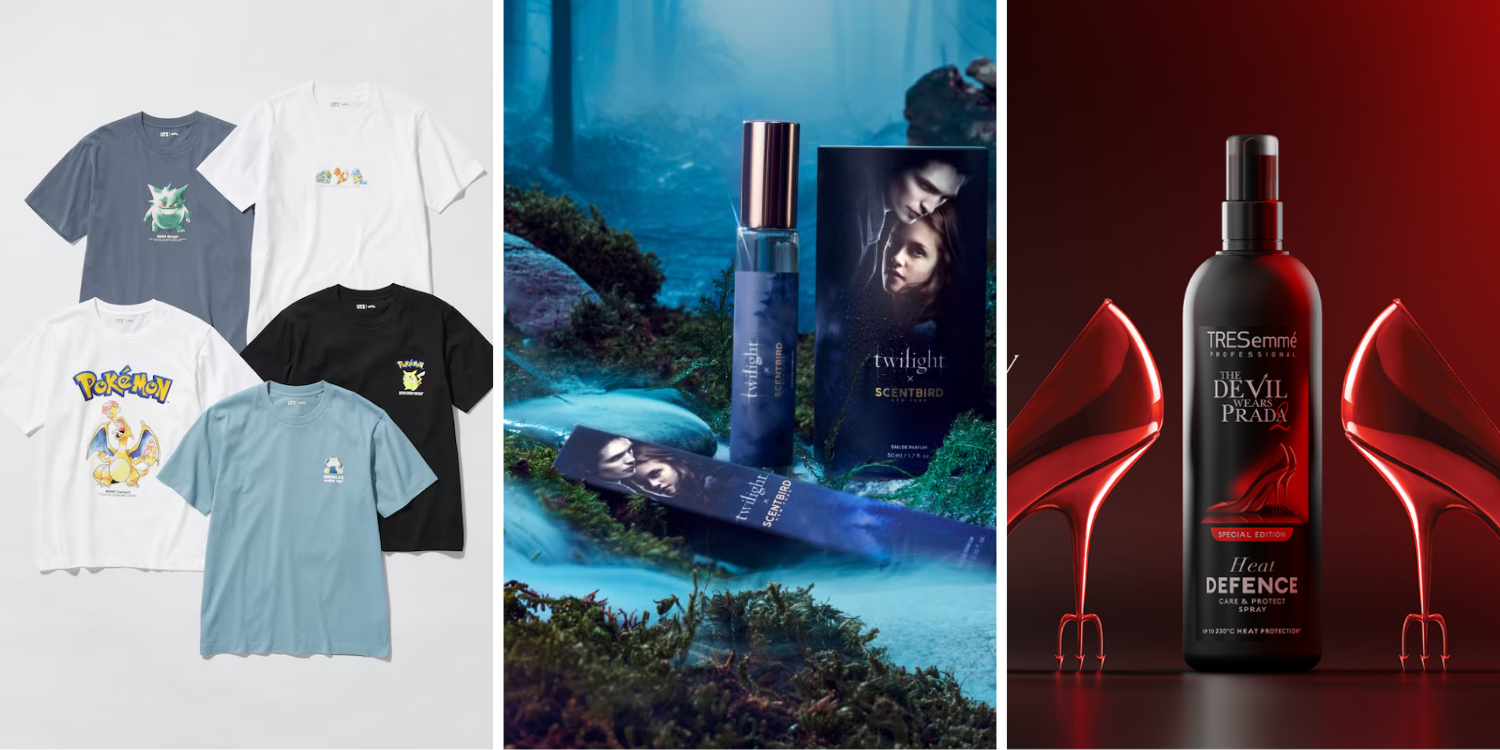
Entertainment marketing is no longer just about driving awareness around a release date.
Today, audiences expect more than trailers, billboards, and social posts. They want experiences, interaction, and opportunities to engage with the worlds they care about beyond the screen itself. As attention becomes more fragmented and traditional advertising becomes easier to ignore, partnerships are emerging as one of the entertainment industry’s most effective tools for building cultural relevance, audience engagement, and long-term visibility.
The modern entertainment landscape is becoming increasingly partnership-driven — not because collaborations are trendy, but because they help entertainment brands extend storytelling, deepen audience engagement, and remain culturally present beyond a launch window.
Audiences Want Participation, Not Just Promotion
Consumers are interacting with entertainment differently than they did even a few years ago. Streaming platforms have shortened attention cycles, social media has accelerated trend turnover, and audiences are constantly being exposed to new content competing for their attention.
 Image Source: TRESemme
As a result, traditional campaign structures alone are no longer enough to sustain audience attention and engagement on their own.
Partnerships allow entertainment properties to move beyond passive viewership and create more active, immersive forms of audience participation. Instead of simply watching a show or film, audiences can experience it through products, retail environments, hospitality activations, experiential moments, and lifestyle integrations that make the story feel tangible.
This shift is especially important in an era where consumers increasingly value immersion and identity-driven engagement. Audiences increasingly want to engage with entertainment in ways that feel immersive, personal, and integrated into their everyday lives.
Entertainment IP is Expanding Beyond the Screen
Entertainment properties are increasingly functioning like lifestyle brands. Successful IP is no longer confined to a platform or release window — it extends into fashion, fragrance, food, wellness, gaming, travel, hospitality, and retail.
Strategic partnerships help entertainment brands stay culturally relevant between premieres, seasons, or theatrical releases while simultaneously introducing the property to new audiences.
At Regatta, we’ve seen firsthand how partnerships can transform entertainment properties into immersive ecosystems that audiences can engage with beyond traditional media.
 Image Source: SONY/Scentbird
One example is the Outlander x DRIFT collaboration, which explored how scent can become an extension of storytelling. Instead of approaching the collaboration purely as a promotional moment, the partnership focused on creating a sensory experience that extended the atmosphere and emotional world of the series into fans’ everyday lives.
This reflects a broader industry evolution: entertainment partnerships are becoming less about visibility alone and more about building deeper emotional connection and ongoing audience engagement.
Partnerships Create Cultural Staying Power
One of the biggest challenges in entertainment marketing today is maintaining relevance after launch.
The speed of digital culture means that audience attention moves quickly. Partnerships help extend the lifespan of entertainment properties by creating additional moments of conversation, discovery, and engagement across industries and platforms.
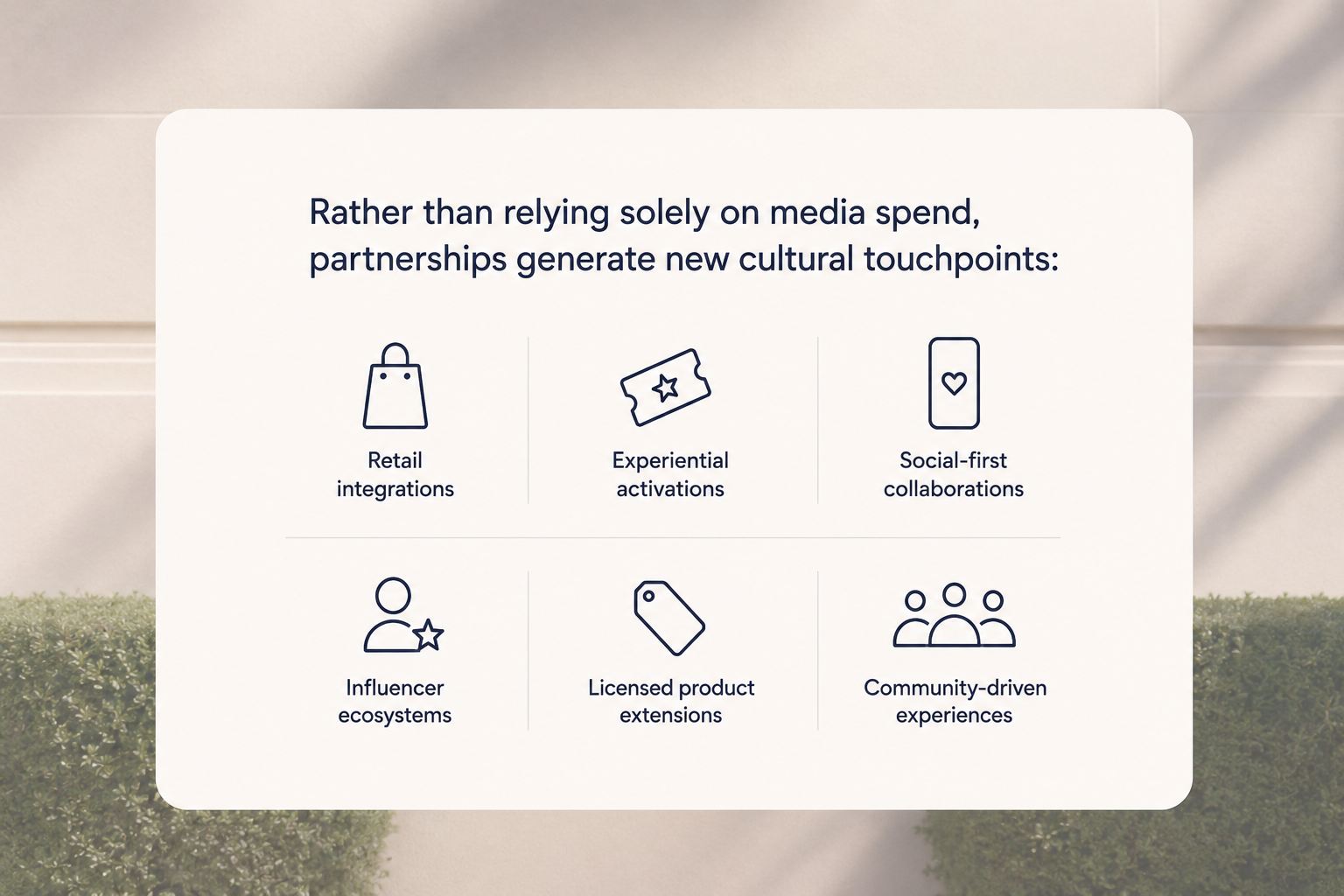
These collaborations allow entertainment brands to remain present in consumers’ lives long after the initial marketing push.
This is particularly important in streaming, where the gap between seasons or releases can create long periods of audience inactivity. Partnerships help bridge those gaps by continuously reintroducing the IP into culture through new formats and environments.
This is where partnership strategy becomes critical. The goal is no longer reach alone, but to create experiences and touchpoints that audiences genuinely connect with.
Entertainment Marketing Is Becoming Ecosystem Marketing
The future of entertainment marketing will likely be defined less by isolated campaigns and more by interconnected ecosystems of partners, platforms, creators, retailers, and experiences.
Studios, streaming platforms, brands, creators, retailers, and experiential partners are increasingly working together to build interconnected audience experiences that live across physical and digital spaces simultaneously.
 Image Source: Scentbird
Partnerships are no longer secondary campaign tactics. They are becoming foundational components of how entertainment brands sustain relevance, extend storytelling, and build long-term fandom.
As the industry continues evolving, the entertainment companies that succeed will be the ones that understand how to turn audiences from viewers into participants — and partnerships are becoming one of the most effective ways to make that happen.
Interested in exploring partnerships that can extend storytelling, deepen audience engagement, and create cultural relevance beyond the screen?
Connect with Regatta to start the conversation.
Related Posts

Scentbird x Death Becomes Her: How Fragrance Extends Broadway Storytelling
The Scentbird x Death Becomes Her collaboration brings Broadway glamour into fragrance through three character-inspired collections. By translating Madeline Ashton, Viola, and Helen Sharp into curated scent experiences, the partnership shows how entertainment brands can create more personal, expressive, and memorable ways for fans to connect.

More Than an Awards Show: The Future of Scent Discovery
Scentbird’s Digital Fragrance Awards highlight a major shift in how fragrance is discovered—moving from physical counters to digital, social, and community-driven ecosystems. As creators, platforms, and consumers reshape the journey, scent discovery is becoming more participatory, scalable, and deeply embedded in culture.

From Pop-Ups to Partnerships: How Experiential Marketing Is Driving Brand Growth
Pop-up events are redefining modern marketing by blending immersive experiences with measurable growth. This article explores why brands are investing in experiential activations and how partnerships, data capture, and social amplification transform temporary events into long-term marketing success.
